Blue light photodynamic therapy, commonly called PDT, is an in-office treatment that combines a light-sensitive medication with a controlled blue light source. It is primarily used to treat actinic keratoses, which are precancerous growths caused by long-term sun exposure. PDT may also improve the overall appearance and texture of severely sun-damaged skin.
Blue light PDT is most commonly recommended for actinic keratoses on areas such as the face, scalp, arms and hands. Because it can treat a broader area of damaged skin, it may address both visible growths and less noticeable areas of precancerous change.
In selected patients, the treatment may also be recommended to help improve inflammatory acne, excessive oil production or the appearance of sun-damaged skin. Your dermatology provider will determine whether PDT is appropriate for your specific concerns.
Treatment begins with the application of a prescription photosensitizing medication to the targeted skin. The medication is absorbed more readily by abnormal or damaged cells and makes the treated area temporarily sensitive to light.
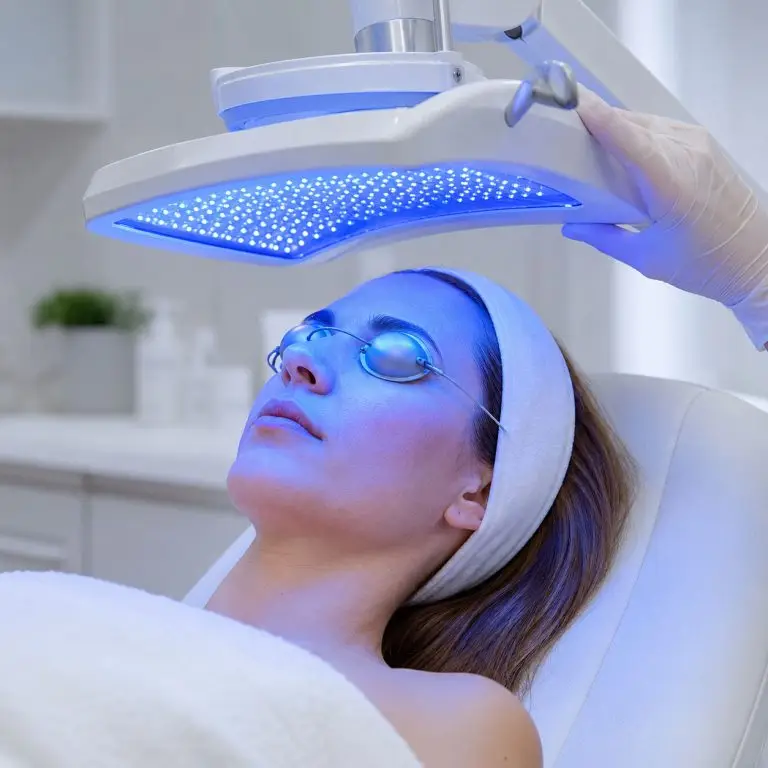
After the medication remains on the skin for a prescribed amount of time, the area is exposed to a controlled blue light. The light activates the medication, creating a reaction that damages targeted cells while limiting injury to the surrounding healthy tissue.
Before treatment, the skin is cleaned and may be prepared to help the medication penetrate more effectively. The photosensitizing solution is then applied to the treatment area.
After the recommended incubation period, the medication is removed and the skin is exposed to blue light. Protective eyewear is worn during the light treatment. Patients commonly experience tingling, warmth, stinging, prickling or burning while the light is active.
The exact preparation, incubation time and length of light exposure depend on the medication used, the treatment area and your provider’s protocol.
The treated skin may become red, swollen, tender, dry or sensitive. Peeling, scaling, crusting, itching or a sunburn-like reaction may also occur as the damaged cells are cleared from the skin.
The intensity of the reaction varies from person to person and depends on the area treated and the strength of the treatment. Your provider will explain how to cleanse, moisturize and care for your skin during the healing process.
The medication used during PDT makes the treated skin extremely sensitive to sunlight and other bright light sources. Accidental exposure can cause significant burning, stinging, redness or swelling.
Follow your provider’s instructions carefully and protect the treated area with appropriate clothing, such as a wide-brimmed hat, long sleeves or gloves. Depending on the medication used, strict avoidance of sunlight and bright indoor light may be required for approximately 40 hours after application. Sunscreen alone does not prevent the medication from being activated during this period.
Some patients achieve their desired improvement after one treatment, while others may require an additional session. The number and timing of treatments depend on the condition being treated, the severity of the sun damage and how the skin responds.
Your dermatology provider will examine the treated area during follow-up and determine whether another treatment or a different therapy is needed.
Blue light PDT may not be appropriate for people with certain light-sensitive conditions, porphyria, sensitivity to blue light or an allergy to the photosensitizing medication. Tell your provider about your medical conditions, medications, vitamins and supplements before treatment because some products can increase sensitivity to light.
Blue light photodynamic therapy can treat areas of precancerous sun damage while improving the appearance and texture of the skin. The Dermatology Clinic can evaluate your skin and determine whether PDT is an appropriate part of your personalized treatment plan. Contact us today to get scheduled.
We would love to get started on a solution that perfectly fits your needs.