
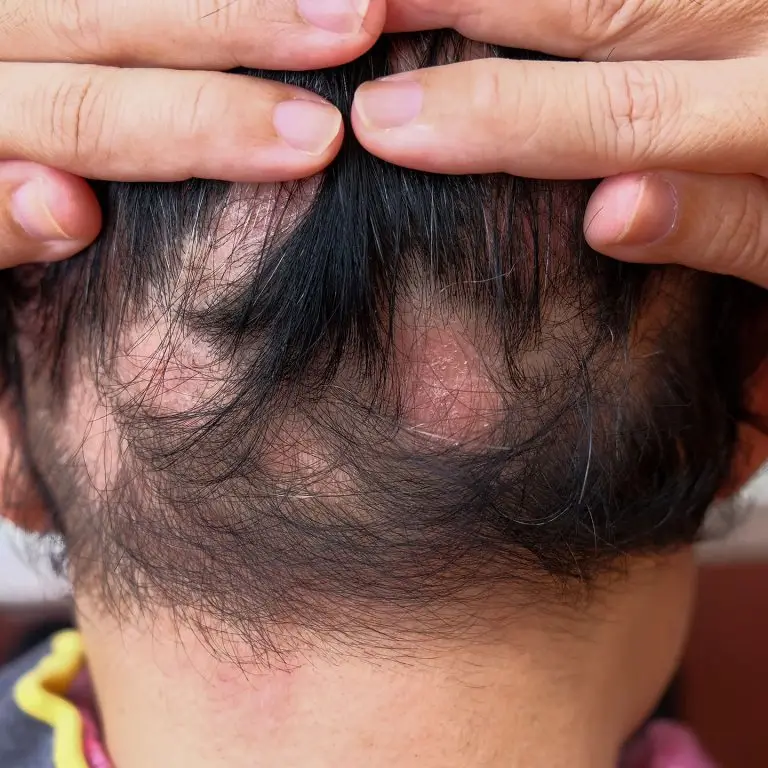
Alopecia areata is an autoimmune condition that causes sudden, nonscarring hair loss. It most often causes one or more smooth, round patches on the scalp but can affect the beard, eyebrows, eyelashes or hair anywhere on the body.
The condition does not destroy the hair follicles, which means regrowth is possible. However, its course is unpredictable, and hair loss may improve, return or become more extensive.
Signs may include:
The exposed skin usually looks normal and does not have the scale, crusting or scarring seen with some other forms of hair loss.
Some patients notice itching, tingling or burning before hair falls out.
Alopecia areata develops when the immune system mistakenly attacks hair follicles. Why this occurs is not fully understood.
Genetics may contribute, and some patients have a personal or family history of autoimmune disease. Stress or illness may occur before an episode, but these factors are not the sole cause.
Alopecia areata is not contagious and is not caused by poor hair care.
A dermatologist will examine the scalp, hair and nails and ask how quickly the hair loss developed.
Your provider may gently pull on the surrounding hair or use magnification to inspect the follicles. Blood testing may be considered when there are symptoms or a history suggesting thyroid disease, nutritional deficiency or another autoimmune condition.
A scalp biopsy is rarely necessary but may be performed when the diagnosis remains uncertain.
Some patients, particularly children with limited hair loss, experience spontaneous regrowth. Treatment may be recommended to encourage faster or more complete regrowth.
Options may include:
Treatment depends on age, the amount of hair loss, disease duration and previous response.
Regrown hair may initially appear white or lighter before returning to its usual color.
Protect exposed scalp skin from sunlight with sunscreen, a hat or another covering. Patients without eyelashes may benefit from protective eyewear.
Gentle hair care, cosmetic camouflage, wigs and eyebrow products may help while treatment is working.
Sudden patchy hair loss should be evaluated because fungal infection, thyroid disease and other conditions can look similar. The Dermatology Clinic can identify the cause and recommend an individualized plan to encourage regrowth. Contact us today to get scheduled.
We would love to get started on a solution that perfectly fits your needs.