Atypical moles, sometimes called dysplastic nevi, are moles with features that differ from ordinary moles. They may be larger, irregularly shaped or contain several colors.
Most atypical moles are benign. However, they can resemble melanoma, and having multiple atypical moles may be associated with an increased risk of developing melanoma elsewhere on the skin.
An atypical mole may:
Atypical moles commonly develop on the trunk but may appear anywhere, including areas that receive little sunlight.
Appearance alone cannot reliably determine whether a mole is benign, atypical or cancerous.
An atypical mole is not the same as melanoma. Most remain harmless and never become cancerous.
However, patients with numerous atypical moles may have a higher overall melanoma risk. The level of risk also depends on factors such as personal history, family history, ultraviolet exposure and the total number of moles.
This makes regular monitoring important.
Use the ABCDE warning signs:
Also watch for an “ugly duckling,” meaning a mole that looks different from the rest.
Schedule an examination if a mole:
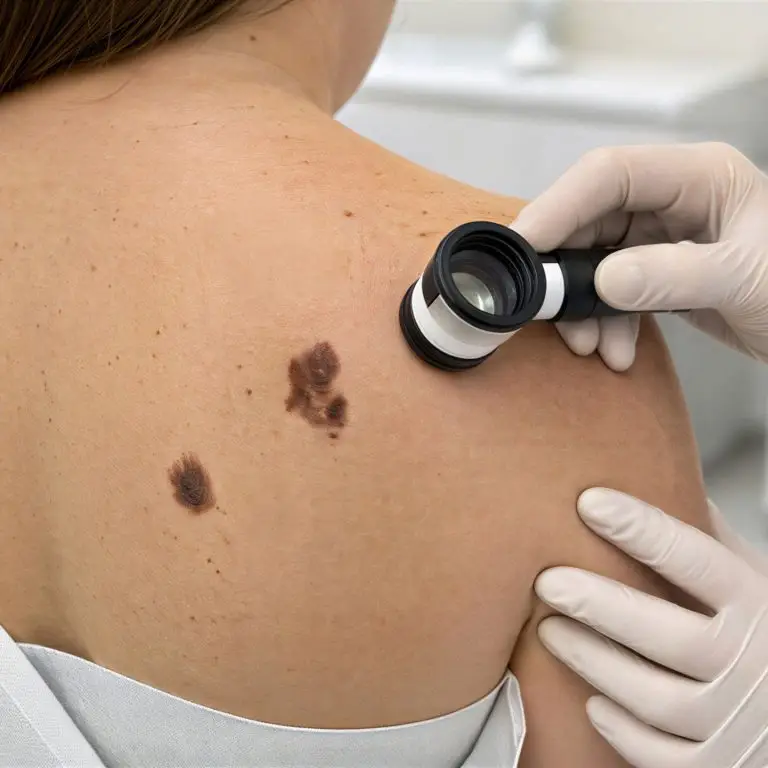
Your dermatologist will examine the mole and may use a dermatoscope to view structures beneath its surface.
Clinical photographs or total-body photography may be recommended for patients with many moles. These images allow the skin to be compared over time.
A biopsy is performed when a mole has concerning features or cannot be confidently identified as benign. The removed tissue is examined under a microscope to determine whether atypical cells or melanoma are present.
No. Removing every atypical mole is not generally necessary and cannot eliminate the possibility of developing melanoma elsewhere.
A mole may be removed when:
Your provider will explain whether observation or removal is appropriate.
Regular examinations are especially important for patients with numerous unusual moles or a personal or family history of melanoma. The Dermatology Clinic can evaluate individual spots, document the skin and recommend an appropriate surveillance schedule. Contact us today to get scheduled.
We would love to get started on a solution that perfectly fits your needs.