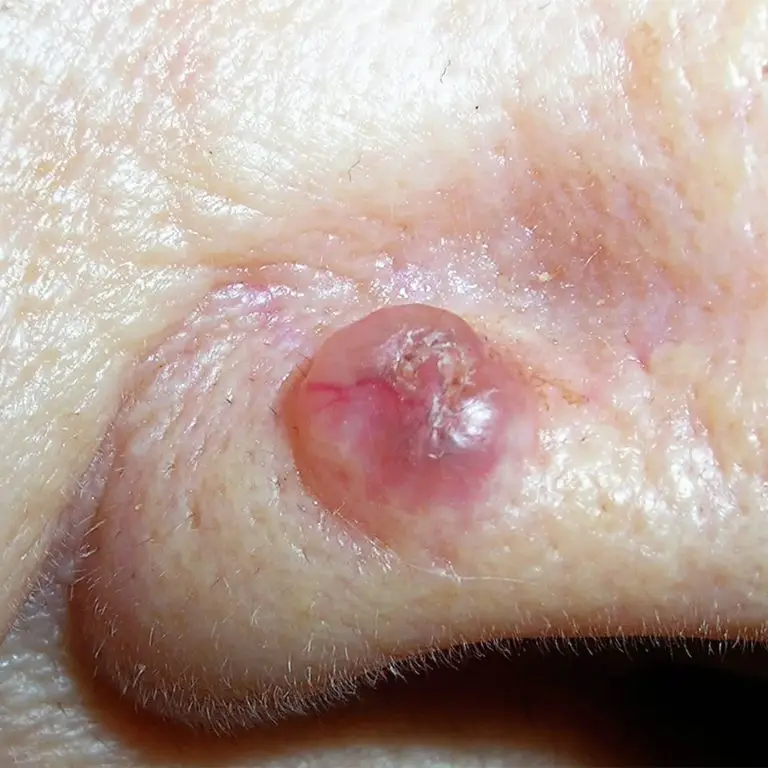
Basal cell carcinoma, or BCC, is a common form of skin cancer that begins in the basal cells of the epidermis. It typically grows slowly and rarely spreads to distant areas, but it can grow deeply and damage nearby skin, nerves, cartilage or bone when left untreated.
Early diagnosis generally allows BCC to be treated effectively with a procedure selected according to the tumor’s size, location and microscopic features.
Basal cell carcinoma can appear in several different ways. It may look like:
BCC frequently develops on sun-exposed areas such as the face, nose, ears, scalp, neck, shoulders and arms. However, it can occur anywhere on the skin.
The growth may not cause discomfort. Some basal cell carcinomas itch, feel tender or bleed after minor irritation.
Most basal cell carcinomas are associated with ultraviolet damage from sunlight or indoor tanning. Damage accumulates over time and can cause abnormal changes in basal cells.
Risk factors may include:
People with darker skin tones can also develop BCC, and diagnosis may be delayed when a suspicious growth is mistaken for a scar, mole or other harmless spot.
A dermatologist will examine the growth and surrounding skin. A skin biopsy is required to confirm the diagnosis.
During a biopsy, your provider removes all or part of the suspicious area. A laboratory then examines the sample to determine whether cancer cells are present and identify the specific type of BCC.
The biopsy results help guide treatment.
Treatment depends on the tumor’s location, size, depth, subtype and whether it has been treated previously.
Options may include:
Mohs surgery may be recommended for BCCs on the face, ears, scalp, hands or other areas where preserving healthy tissue is especially important. It may also be used for large, recurrent or higher-risk tumors.
Most patients with an early BCC have an excellent outcome. However, developing one basal cell carcinoma increases the likelihood of developing another skin cancer.
Ongoing care may include:
A nonhealing sore, recurring scab or slowly growing bump should be examined. The Dermatology Clinic can perform a biopsy, explain your results and develop an appropriate treatment and follow-up plan. Contact us today to get scheduled.
We would love to get started on a solution that perfectly fits your needs.