
Lichen planus is an inflammatory condition that can affect the skin, mouth, genitals, scalp, hair or nails. Its appearance and symptoms depend on the area involved.
Lichen planus is not contagious. Some cases clear over time, while others require ongoing treatment to reduce inflammation and prevent complications.
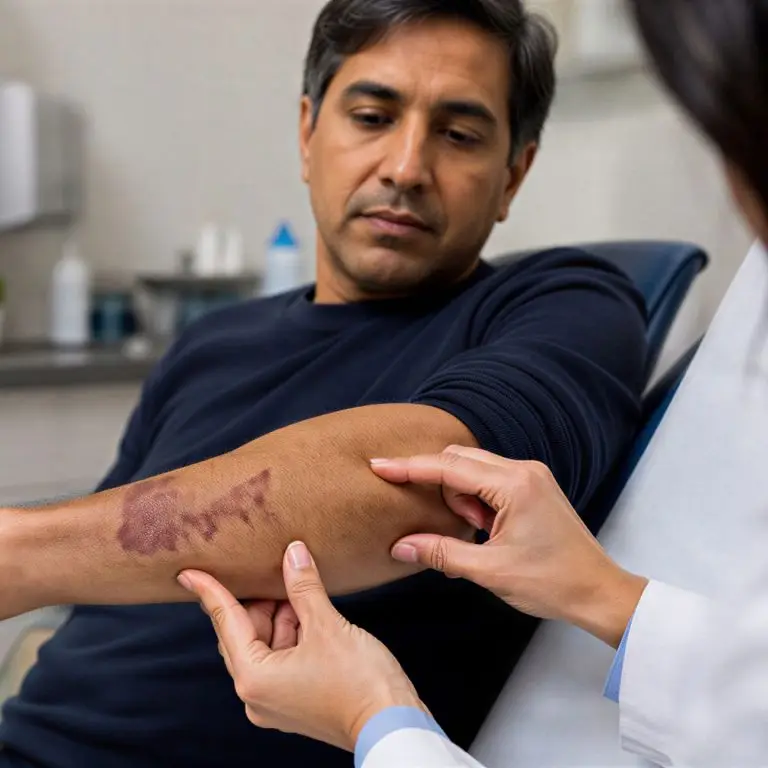
On the skin, lichen planus often causes small, flat-topped bumps that may be:
After the bumps clear, they may leave temporary dark marks.
Inside the mouth, lichen planus can cause:
Genital lichen planus may cause soreness, burning, erosions or scarring.
When the scalp is affected, the condition is called lichen planopilaris. It can cause redness, scale, itching, burning and permanent scarring hair loss.
Nail involvement may cause:
Early treatment is especially important when the scalp or nails are involved because some damage can become permanent.
Lichen planus appears to develop when the immune system targets cells in the skin or mucous membranes. The reason this occurs is not always known.
Certain medications, metal dental materials, infections or other triggers may cause lichen planus-like reactions in some patients.
The condition cannot be spread through touching, sharing items or intimate contact.
A dermatologist may diagnose lichen planus by examining the affected area. A biopsy is often helpful because the condition can resemble eczema, psoriasis, fungal infection, autoimmune disease or other inflammatory disorders.
Blood testing or additional evaluation may be recommended depending on symptoms and medical history.
Treatment depends on the location and severity.
Options may include:
Scalp lichen planus should be treated promptly to reduce the risk of additional permanent hair loss.
Persistent purple bumps, mouth sores, genital irritation or inflammatory scalp hair loss should be evaluated. The Dermatology Clinic can confirm the diagnosis and create a treatment plan based on the areas involved. Contact us today to get scheduled.
We would love to get started on a solution that perfectly fits your needs.