
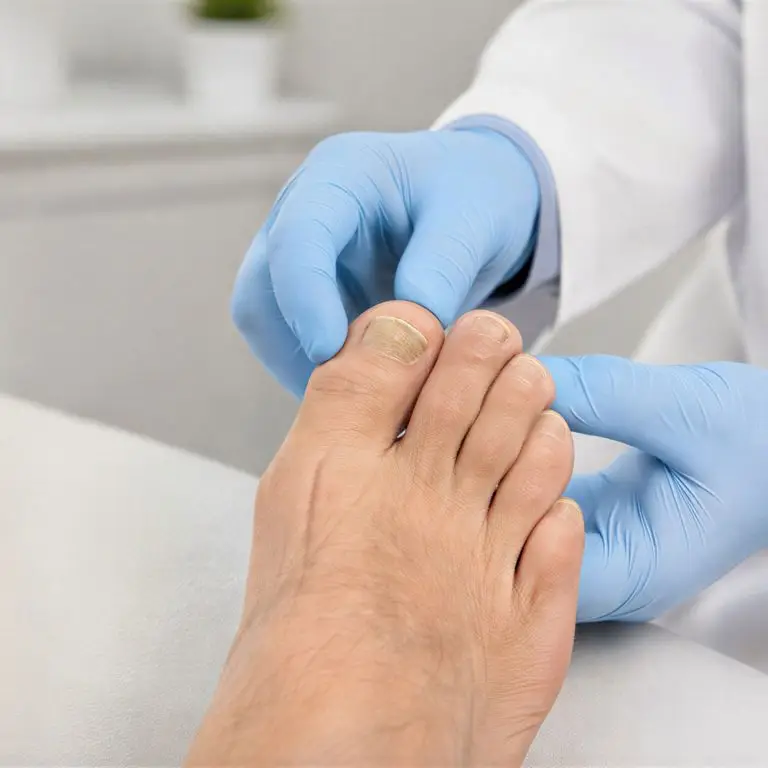
Nail fungal infections, or onychomycosis, develops when fungus infects part of a fingernail or toenail. Toenails are affected more frequently because fungi thrive in warm, moist environments and toenails grow slowly.
Nail fungus usually does not resolve without treatment. It can gradually spread through the nail and to neighboring nails or skin.
A fungal nail may become:
Some patients notice odor, tenderness or pressure.
Athlete’s foot may occur at the same time and can repeatedly spread fungus back to the nails.
Risk factors may include:
Anyone can develop a fungal nail infection.
Several conditions can make a nail thick, discolored or brittle, including psoriasis, trauma, eczema and age-related changes.
For this reason, testing is often recommended before oral antifungal medication is prescribed.
Your provider may collect:
The sample can be examined or sent to a laboratory to determine whether fungus is present.
Treatment depends on the number of affected nails, severity, overall health and test results.
Options may include:
Oral medication is generally more effective for extensive toenail infection but may require blood testing and a review of other medications and health conditions.
Topical nail treatments require consistent use for many months.
Even after the fungus has been eliminated, the damaged portion must grow out. Fingernails may take months to replace themselves, and toenails can take a year or longer.
Recurrence is possible, especially when athlete’s foot or repeated environmental exposure continues.
Keep nails short and dry, change socks regularly and allow shoes to dry completely. Wear footwear in locker rooms, pools and communal showers.
Do not share nail clippers or shoes. Clean nail tools after each use and treat athlete’s foot promptly.
Nail discoloration does not always indicate fungus. The Dermatology Clinic can test the nail, confirm the cause and recommend treatment based on the severity and your overall health. Contact us today to get scheduled.
We would love to get started on a solution that perfectly fits your needs.