Perioral dermatitis is an inflammatory facial rash that usually develops around the mouth. It may also affect the skin around the nose or eyes, where it is sometimes called periorificial dermatitis.
The condition can resemble acne, rosacea, eczema or an allergic reaction. An accurate diagnosis is important because products commonly used for other rashes, especially topical corticosteroids, can worsen perioral dermatitis.
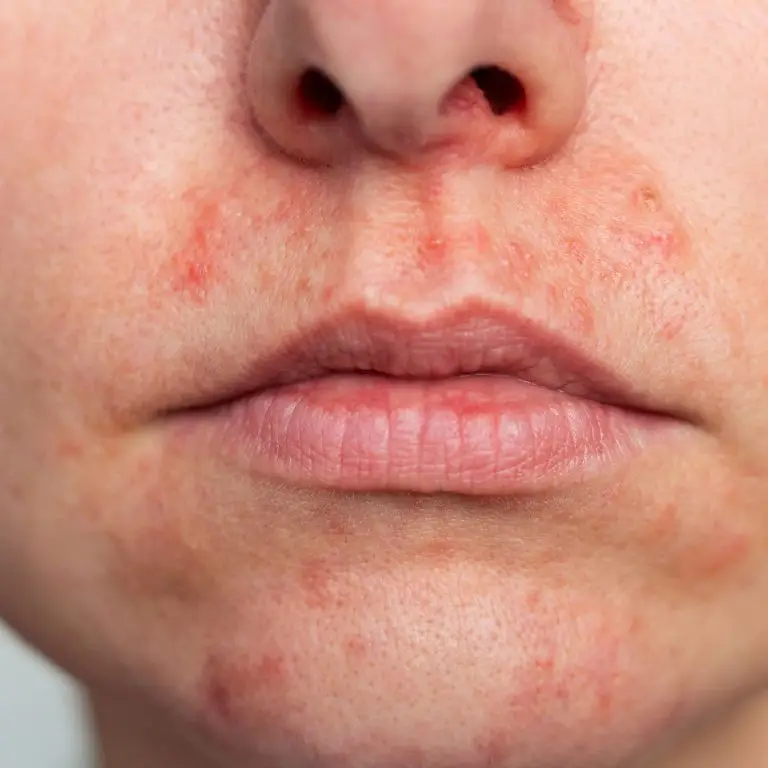
Perioral dermatitis often causes clusters of small bumps. The affected skin may be:
Some bumps contain clear fluid or pus. The rash frequently forms around the mouth while leaving a narrow area directly next to the lips unaffected.
It can also develop:
Unlike acne, perioral dermatitis usually does not cause blackheads or deep cysts.
The exact cause is not always clear. Topical corticosteroid use is a frequent trigger, including over-the-counter hydrocortisone.
Other possible contributors include:
A trigger may not be identifiable in every patient.
A dermatologist can often diagnose the condition by examining the rash and reviewing the products and medications used on the face.
Testing is not usually necessary. A skin scraping, culture, patch test or biopsy may occasionally be performed to exclude fungal infection, bacterial folliculitis, allergic contact dermatitis or another inflammatory condition.
A corticosteroid may temporarily reduce redness, making the rash appear better. However, continued use can allow perioral dermatitis to persist or become more extensive.
The rash may flare when the steroid is discontinued. This rebound does not necessarily mean the medication should be restarted.
Do not abruptly stop a prescription steroid that your healthcare provider has instructed you to use. Ask the prescribing provider how it should be discontinued or replaced.
Treatment may include:
Improvement is gradual and may require several weeks or months. Using treatment consistently is important even when the rash does not clear immediately.
A rash around the mouth or eyes should not automatically be treated with hydrocortisone. The Dermatology Clinic can confirm the diagnosis, identify possible triggers and develop a plan to clear the rash while minimizing recurrence. Contact us today to get scheduled.
We would love to get started on a solution that perfectly fits your needs.