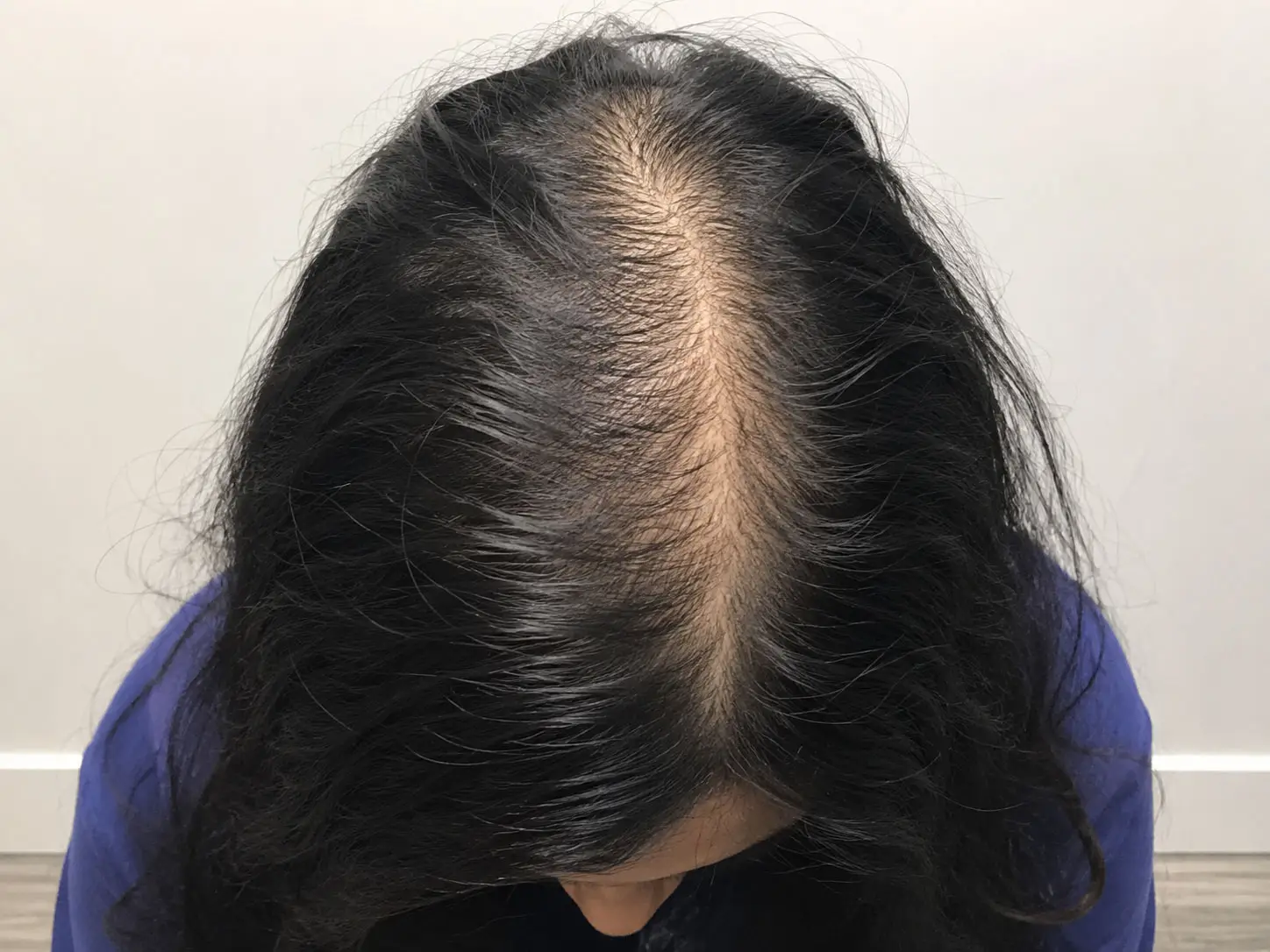
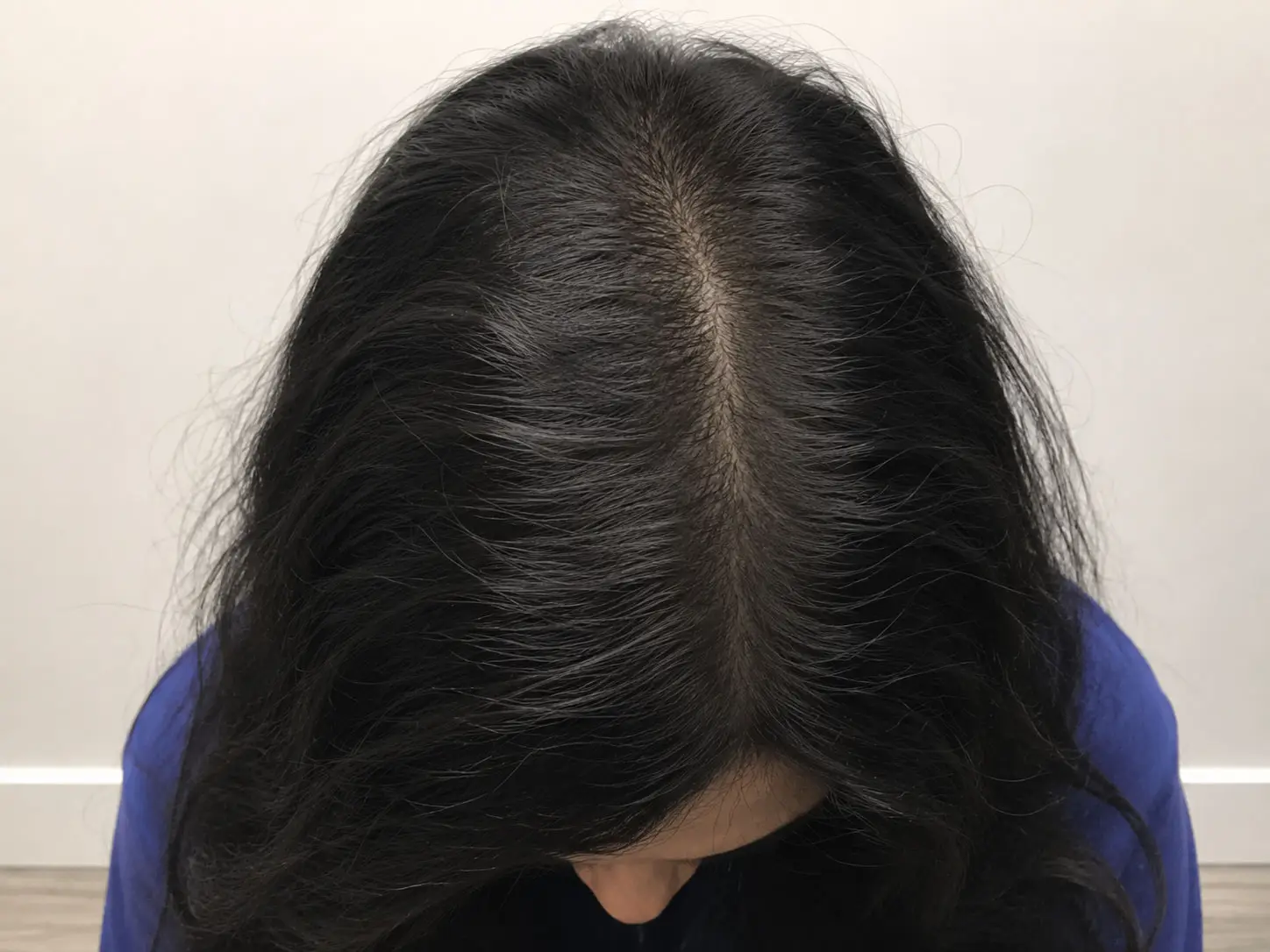
Platelet-rich plasma, or PRP, injections for hair loss is a nonsurgical treatment designed to support healthier hair growth in areas affected by thinning. The procedure uses a concentrated portion of your own blood, which is injected into targeted areas of the scalp or beard.
PRP may help reduce shedding, improve the thickness of existing hair and encourage growth from functioning hair follicles. It tends to be most beneficial for patients with mild to moderate thinning rather than areas where complete hair loss has occurred.
Blood contains several components, including red blood cells, white blood cells, plasma and platelets. Platelets help the blood clot and contain proteins known as growth factors that play a role in healing and tissue repair.
To create PRP, a small amount of your blood is processed in a centrifuge. This separates and concentrates the platelet-rich portion of the plasma, which is then prepared for injection into the treatment area.
PRP is injected into areas where hair is thinning. The concentrated platelets release growth factors that may support the activity of existing hair follicles and improve the environment surrounding them.
Some patients experience less shedding followed by gradual improvements in hair thickness, density or growth. Results vary and researchers are still evaluating which PRP preparation methods and treatment schedules produce the most consistent outcomes.
PRP is most commonly used for male and female pattern hair loss, also known as androgenetic alopecia. It may be considered for patients experiencing:
Not every form of hair loss responds to PRP. Hair loss caused by infection, nutritional deficiency, thyroid disease, medication, inflammation or scarring may require a different treatment.
Hair thinning can have many possible causes and treatments that help one condition may be ineffective for another. Before recommending PRP, your dermatology provider will examine your hair and scalp and review when the hair loss began, how quickly it progressed and whether you have other symptoms.
Depending on the suspected cause, the evaluation may include:
Identifying the cause helps determine whether PRP is likely to help and whether medical treatment should be started first or used alongside it.
PRP can be injected into areas of thinning on the scalp or beard, including the:
Your provider will identify the areas with functioning follicles that are most likely to benefit from treatment.
A small amount of blood is drawn from your arm and placed into a specialized tube. The tube is then spun in a centrifuge to separate and concentrate the platelets within the plasma.
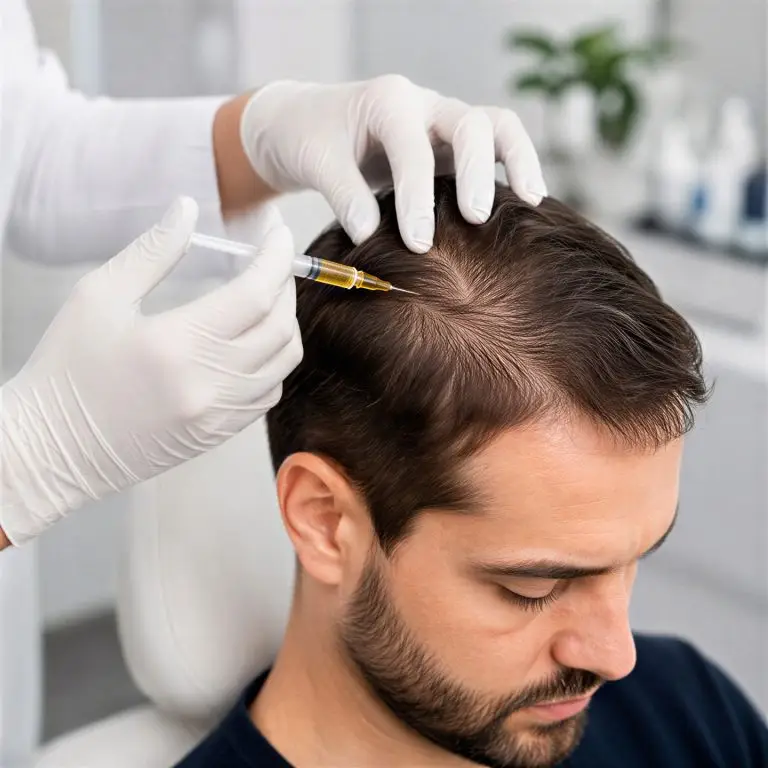
The PRP is transferred into syringes and injected in small amounts across the areas of thinning. The injections are placed at carefully selected points to distribute the PRP throughout the treatment area.
Because the PRP is prepared from your own blood, no donor blood or synthetic filler is used.
Patients may feel a brief pinch, pressure, stinging or tenderness during the blood draw and scalp injections. The scalp can be sensitive, especially when several injections are placed close together.
Cooling, ice, topical numbing medication or another comfort measure may be used when appropriate. Mild soreness or sensitivity can continue after the appointment but usually improves within a short period.
The Dermatology Clinic generally performs one treatment per month for the first three months. Additional treatments may then be scheduled every two to six months, with many patients returning approximately every three months for maintenance.
The recommended schedule may depend on:
PRP is not considered a permanent treatment, so continued maintenance may be necessary to preserve improvement.
Hair grows slowly, so PRP does not produce immediate visible regrowth. During the first few months, some patients notice that shedding decreases. Improvements in thickness, density or new growth may become noticeable later as the hair progresses through its natural growth cycle.
The timing and degree of improvement vary. Some patients respond well, while others experience limited or no noticeable change. Several months may be needed before the response can be evaluated accurately.
PRP is intended to support existing follicles rather than replace follicles that have been permanently lost. Potential improvements may include:
Complete restoration of previously lost hair cannot be guaranteed. Results depend on the cause of the hair loss, the condition of the follicles, age, genetics, overall health and consistency with treatment.
PRP generally involves little to no downtime. Most patients can return to work and their usual activities shortly after treatment.
Temporary effects may include:
Swelling and discomfort commonly improve within a day or two.
Before your appointment:
Certain blood disorders or medications may affect whether PRP can be performed safely. Do not stop a prescribed medication unless the healthcare professional who prescribed it tells you to do so.
Follow the personalized instructions provided by your treatment team. You may be advised to:
Contact the office if pain, swelling or redness becomes more severe rather than gradually improving.
PRP is prepared from your own blood, which avoids the risks associated with using donor blood. However, the injections and blood-processing procedure still carry potential risks.
Possible complications include:
Sterile preparation and appropriate injection technique are important for reducing the risk of contamination or infection.
PRP may be appropriate for men and women with mild to moderate thinning who still have functioning hair follicles in the affected areas.
Good candidates generally:
Patients with advanced hair loss or smooth areas where follicles are no longer active are less likely to experience meaningful regrowth.
PRP may need to be postponed or avoided if you:
Your provider will review your medical history and determine whether the procedure is appropriate.
PRP may be used alone or as part of a broader hair-restoration plan. Depending on your diagnosis, your provider may also recommend:
Combining PRP with appropriate medical treatment may provide better results for some patients than using PRP alone.
PRP offers a nonsurgical approach to supporting existing hair follicles and improving the appearance of mild to moderate thinning. The Dermatology Clinic can evaluate your hair and scalp, identify the likely cause of your hair loss and determine whether PRP should be included in your personalized treatment plan. Contact us today to get scheduled.
We would love to get started on a solution that perfectly fits your needs.