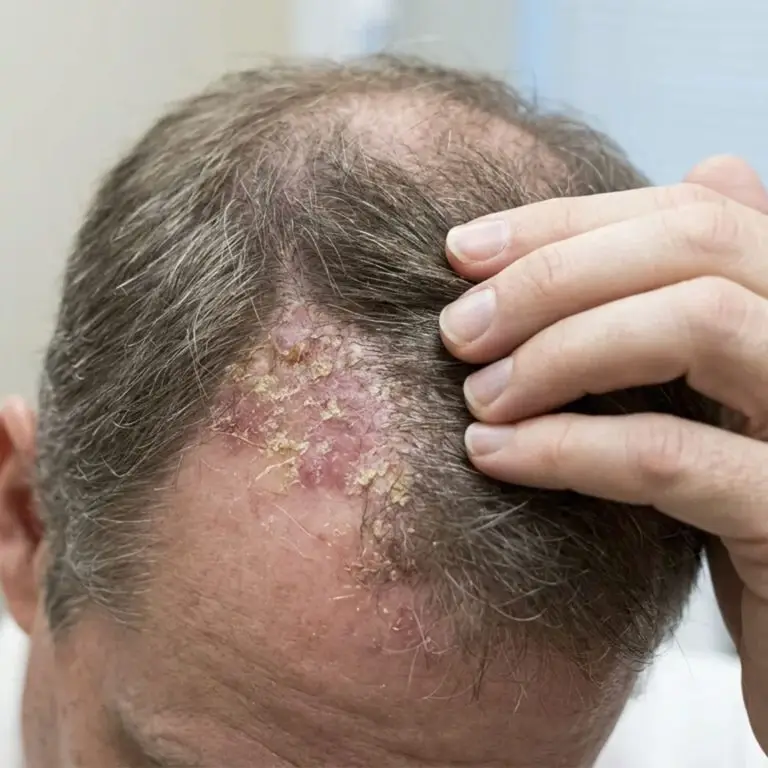
Seborrheic dermatitis is a common inflammatory condition that causes scaling, flaking, irritation and discoloration in oily areas of the skin. On the scalp, it is commonly associated with dandruff. In infants, seborrheic dermatitis of the scalp is often called cradle cap.
The condition is not contagious and is not caused by poor hygiene. It often improves with treatment but may return periodically.
Seborrheic dermatitis can cause:
On darker skin tones, affected areas may appear lighter or darker than the surrounding skin rather than bright red.
Seborrheic dermatitis frequently affects the:
The exact cause is not fully understood. The condition appears to involve inflammation, the skin’s oil production and a reaction to Malassezia yeast that normally lives on the skin.
Flares may be influenced by:
Seborrheic dermatitis does not result from failing to wash the skin or scalp frequently enough.
A dermatology provider can usually diagnose the condition by examining the affected skin and asking about your symptoms.
Seborrheic dermatitis can resemble psoriasis, eczema, rosacea, allergic contact dermatitis or a fungal infection. A biopsy or other testing is rarely necessary but may be recommended when the diagnosis is uncertain.
Treatment depends on where the condition appears and how severe it is.
A personalized plan may include:
Medicated shampoos must generally remain on the scalp for a specific amount of time before rinsing. Your provider will explain how often to use the product and whether it can be used on areas such as the beard or chest.
Because facial and eyelid skin is delicate, do not apply strong dandruff or steroid products to these areas without professional guidance.
Use gentle, fragrance-free products and avoid scratching or aggressively removing scale. Wash according to your provider’s instructions and treat a flare promptly before it becomes more extensive.
Some patients benefit from rotating medicated shampoos because a single product may become less effective over time.
Persistent scalp flaking or facial irritation may have several possible causes. The Dermatology Clinic can confirm the diagnosis and develop a plan to clear active symptoms and reduce future flare-ups. Contact us today to get scheduled.
We would love to get started on a solution that perfectly fits your needs.