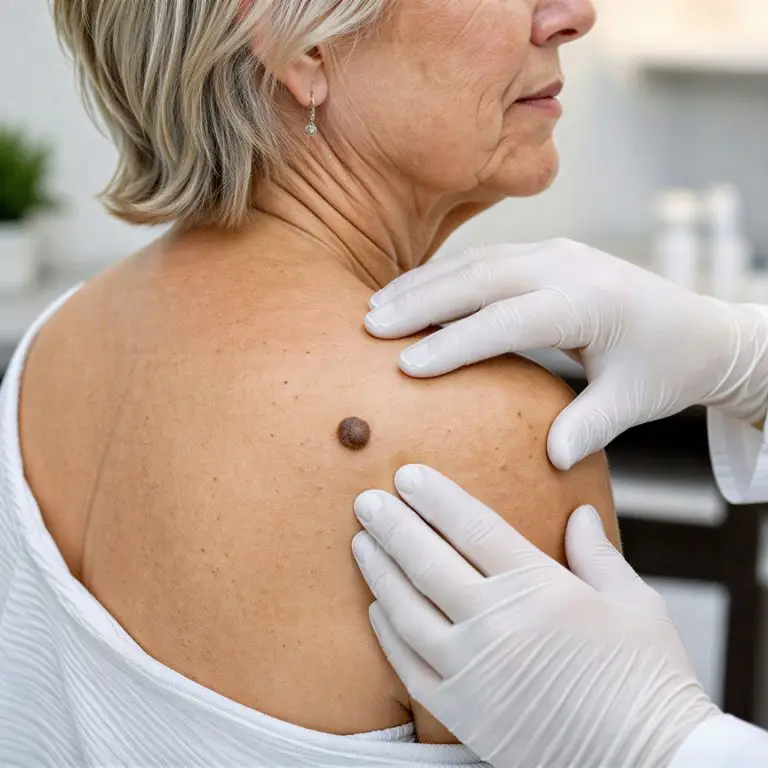
Seborrheic keratoses, commonly called SKs, are noncancerous skin growths that become more common with age. They can develop almost anywhere on the skin and may range from a single growth to many growths across the body.
Although seborrheic keratoses are harmless, they can resemble warts, moles, actinic keratoses or certain types of skin cancer. A dermatology examination can confirm the diagnosis and determine whether a growth should be removed or tested.
Seborrheic keratoses can vary significantly in size, shape, color and texture. They may be tan, brown, black, white or similar to your natural skin tone.
These growths commonly appear:
Seborrheic keratoses frequently develop on the face, scalp, neck, chest, shoulders, back or abdomen. They generally do not form on the palms or soles.
Most SKs do not cause symptoms, but some become itchy, irritated or tender. A raised growth may catch on clothing, jewelry or grooming tools and begin bleeding.
The exact cause of seborrheic keratoses is not fully understood. They are more likely to develop as people grow older, and a tendency to have numerous growths can run in families.
Seborrheic keratoses are not caused by a virus and cannot spread from one person to another. They are not contagious and do not develop because the skin is unclean.
Seborrheic keratoses are benign and do not normally become skin cancer. However, some skin cancers can resemble an SK, especially when a growth is dark, crusted, irritated or changing.
Schedule a dermatology evaluation if a growth:
Your provider may examine the growth with a dermatoscope. A biopsy may be recommended when the diagnosis is uncertain.
Most seborrheic keratoses do not require treatment. Removal may be recommended if a growth is irritated, repeatedly catches on clothing, interferes with grooming or creates a cosmetic concern.
Treatment options may include:
The most appropriate method depends on the thickness, size, color and location of the growth.
Temporary redness, crusting, tenderness or changes in skin color may occur after removal. A treated growth can occasionally return, and new seborrheic keratoses may continue developing elsewhere.
Do not cut, scrape, burn or freeze a suspected seborrheic keratosis at home. Without a professional examination, it can be difficult to know whether the growth is actually an SK.
Attempting to remove it yourself can cause bleeding, infection, scarring or delayed diagnosis of a more serious condition.
A new or changing growth should not automatically be assumed to be a seborrheic keratosis. The Dermatology Clinic can examine the area, confirm the diagnosis and recommend removal when the growth is irritated or bothersome. Contact us today to get scheduled.
We would love to get started on a solution that perfectly fits your needs.