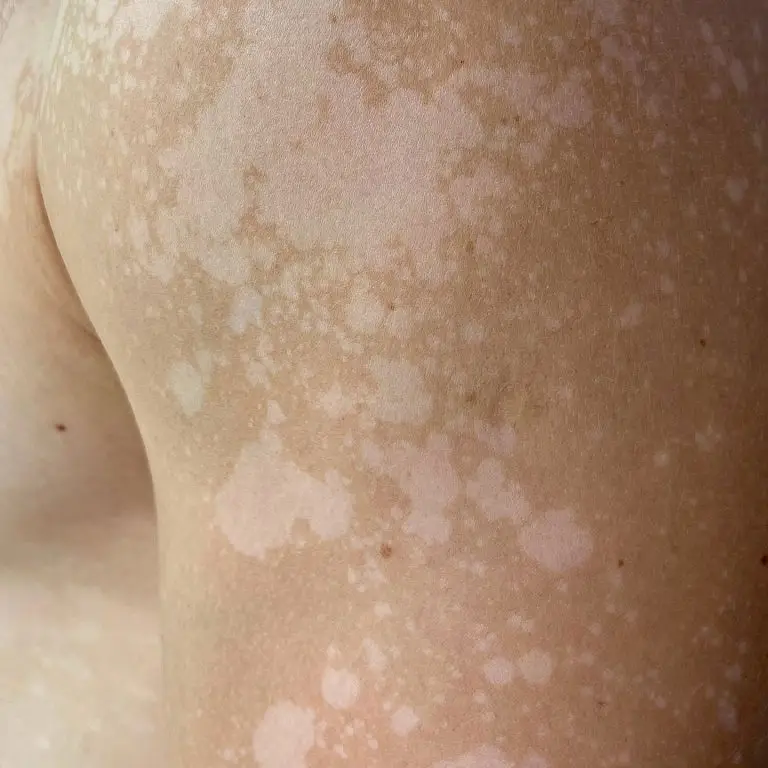
Tinea versicolor is a common superficial yeast infection that causes patches of skin to become lighter or darker than the surrounding area. It is also called pityriasis versicolor.
The yeast responsible for the condition normally lives on the skin. Tinea versicolor develops when the yeast grows more actively than usual, particularly in warm and humid conditions.
Tinea versicolor may cause:
It commonly develops on the:
Children may also develop patches on the face.
The affected skin may not tan normally, making lighter areas appear more obvious during the summer.
Tinea versicolor is not generally considered contagious because the yeast involved already lives on most people’s skin.
It is not caused by poor hygiene. Heat, sweating, oily skin, hormonal changes and a weakened immune system can make overgrowth more likely.
Teenagers and young adults develop it frequently because their skin tends to produce more oil.
A dermatologist may diagnose tinea versicolor by examining the patches and gently scraping the surface.
When confirmation is needed, a small skin sample can be examined under a microscope. A Wood’s lamp may also be used to look for changes that support the diagnosis.
Testing helps distinguish tinea versicolor from vitiligo, eczema, seborrheic dermatitis and other causes of altered pigmentation.
Treatment may include:
Oral medication is not necessary for most patients and requires review of possible side effects and medication interactions.
The yeast may clear before normal color returns. Skin tone can take weeks or months to become more even, so persistent light or dark patches do not always mean treatment failed.
Recurrence is common, particularly in warm, humid climates. A provider may recommend periodic use of an antifungal cleanser or another maintenance treatment.
Keeping the skin cool and dry when practical may also help, although recurrence can occur despite appropriate hygiene.
Discolored patches can have several causes and do not always require antifungal treatment. The Dermatology Clinic can confirm the diagnosis, recommend treatment and develop a maintenance plan when infections repeatedly return. Contact us today to get scheduled.
We would love to get started on a solution that perfectly fits your needs.