
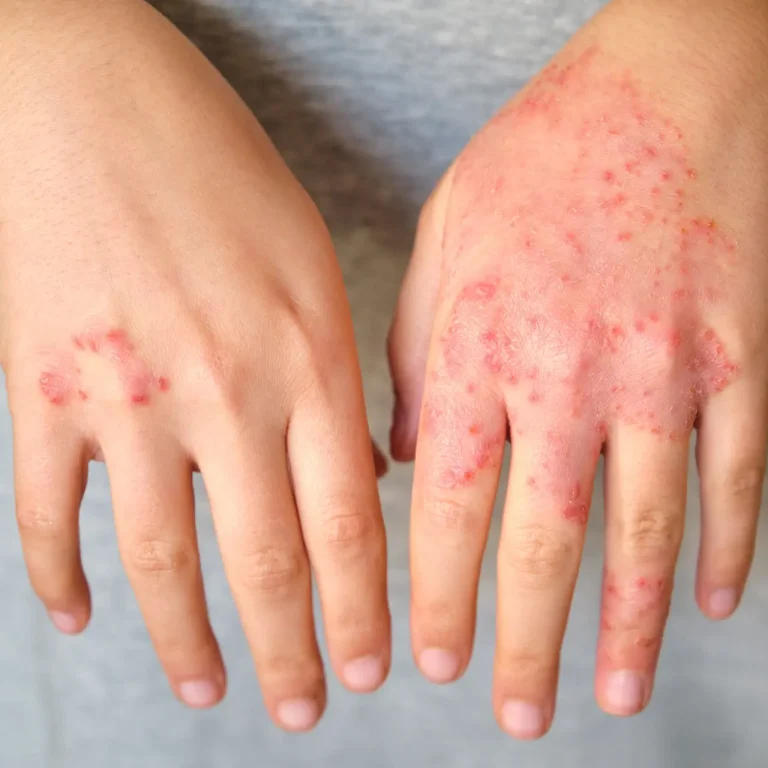
Red, dry, itchy or scaly skin can have many causes. Two common possibilities are eczema and psoriasis. Although these conditions can sometimes look similar, they have different underlying causes and may require different approaches to treatment.
Knowing some of the typical differences can help you recognize when a persistent rash deserves a closer look. However, appearance alone is not always enough to determine what is causing a skin problem. A dermatology provider can evaluate the location, appearance and symptoms of a rash and recommend appropriate treatment.
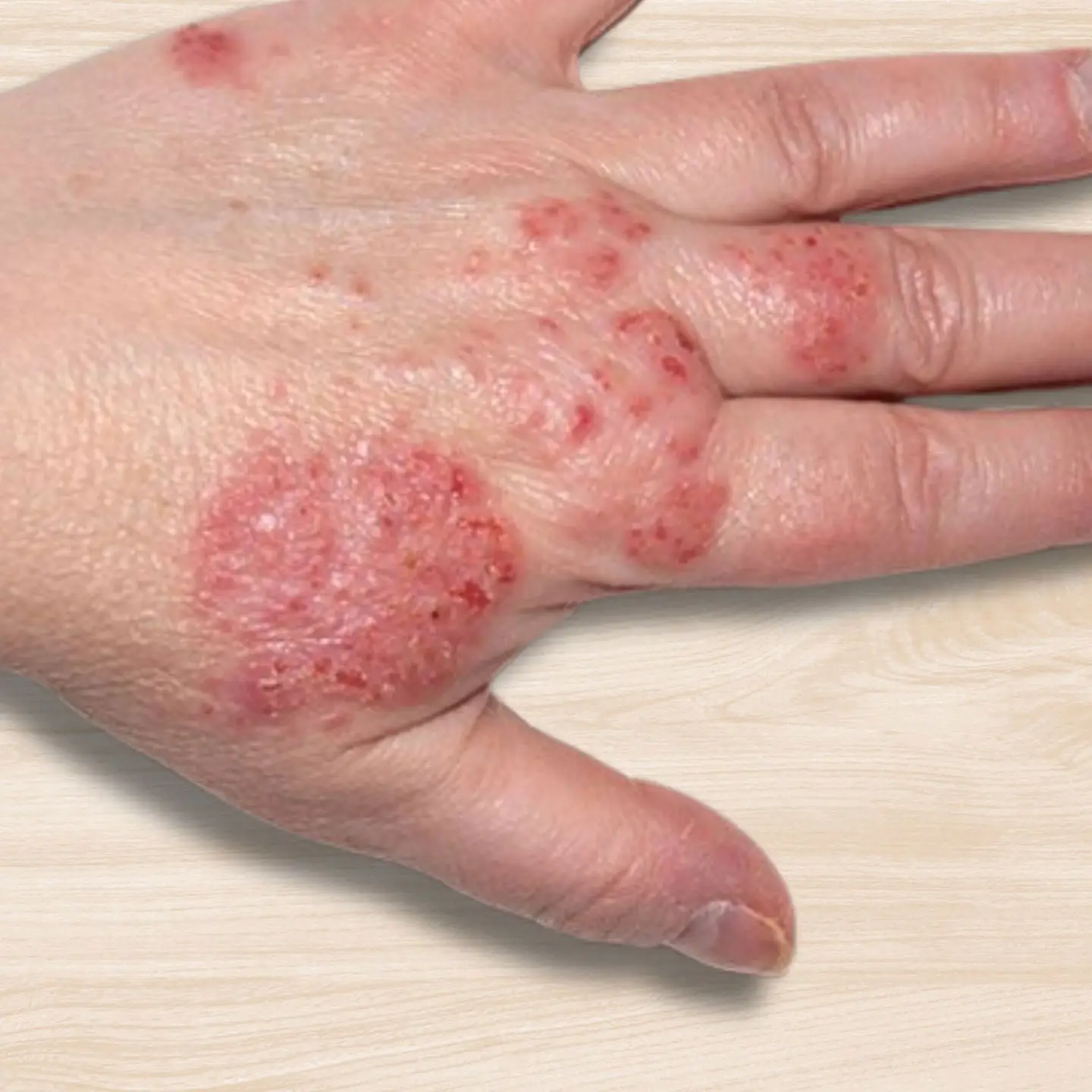
Eczema describes a group of inflammatory skin conditions that can cause dry, irritated and itchy skin. Atopic dermatitis is the most common type of eczema.
Eczema is particularly common in children, but it can affect people of any age. Some people develop atopic dermatitis for the first time during adolescence or adulthood.
The condition is associated with problems involving the skin barrier and the immune system. When the skin barrier does not function as effectively as it should, the skin can lose moisture more easily and become more vulnerable to irritation.
Common eczema symptoms can include:
The appearance of eczema can vary depending on age, skin tone, severity and the type of eczema involved.
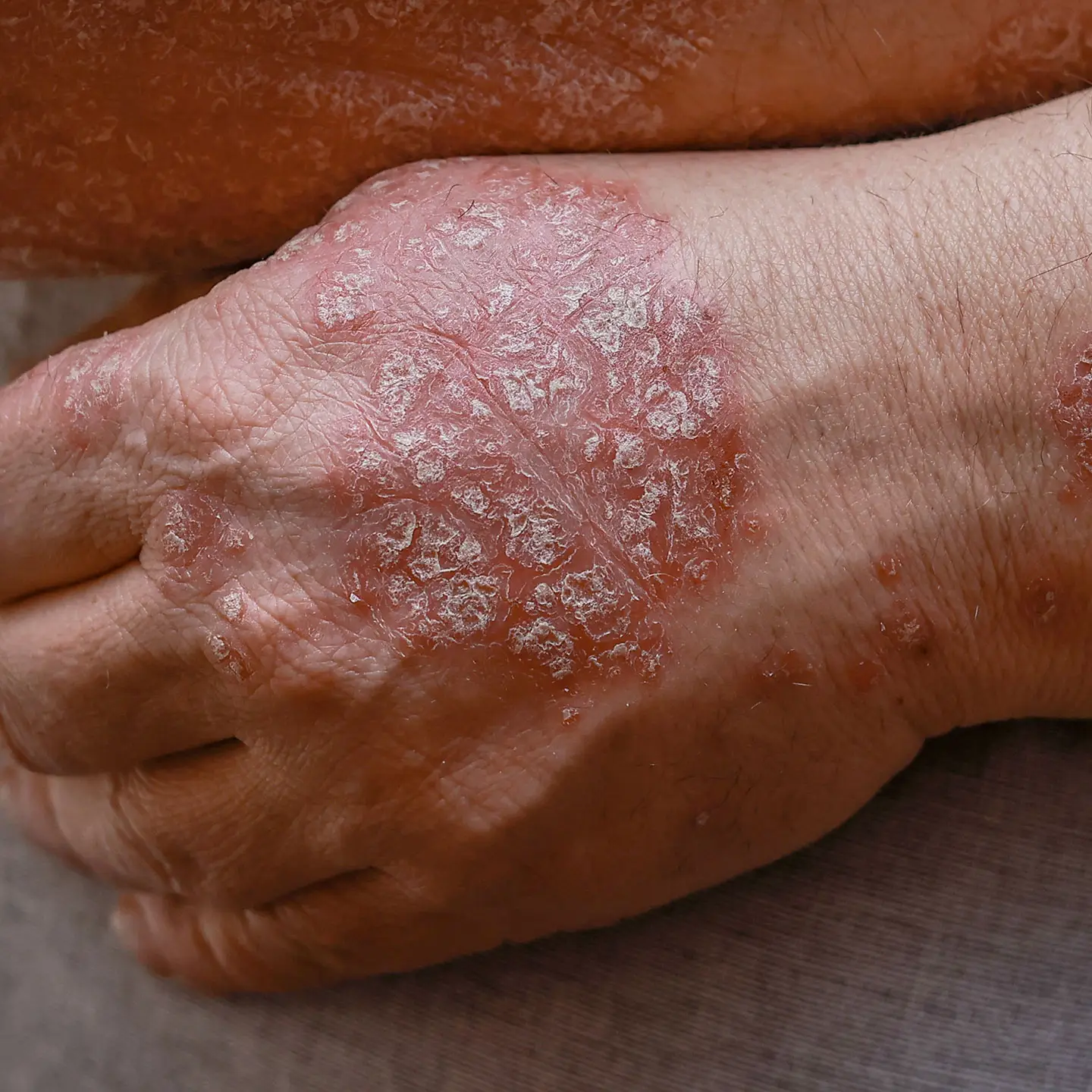
Psoriasis is a chronic immune-mediated condition that causes skin cells to develop much faster than normal. The additional cells accumulate on the skin, producing the characteristic patches associated with psoriasis.
Plaque psoriasis, the most common form, typically produces well-defined, raised areas of inflamed skin with scaling.
Symptoms may include:
Psoriasis is not contagious. You cannot develop it by touching someone who has the condition.
There are several forms of psoriasis, so not every case has the same appearance or affects the same areas of the body.
Location can provide clues, although neither condition is limited to one part of the body.
Eczema frequently affects areas such as the:
The areas affected can also change with age.
Psoriasis commonly appears on the:
Psoriasis can also affect the nails and skin folds.
Because both conditions can occur in many locations, where a rash appears is only one part of making a diagnosis.
Both conditions can itch, but intense itching is particularly common with eczema.
Scratching may provide temporary relief but can further damage the skin barrier. This can contribute to an itch-scratch cycle in which inflammation causes itching, scratching causes additional irritation and the irritated skin becomes even itchier.
Psoriasis may also itch, sting or burn. Symptoms vary considerably from person to person, so the intensity of itching cannot diagnose either condition by itself.
People with eczema may notice that symptoms improve for periods of time and then flare.
Triggers vary between individuals but may include:
Not every flare has an obvious trigger.
People who repeatedly develop irritation after exposure to a particular product or substance may have contact dermatitis rather than — or in addition to — atopic dermatitis.
Psoriasis can also cycle between periods of improvement and flares.
Potential triggers may include:
Triggers differ from person to person, and psoriasis can flare even when an obvious trigger cannot be identified.
Yes. Although eczema and psoriasis are separate conditions, some people can have features of both.
There are also many other skin conditions that can resemble eczema or psoriasis, including contact dermatitis, fungal infections and other inflammatory skin diseases.
This is one reason a persistent rash should not automatically be assumed to be eczema simply because it is dry and itchy — or psoriasis simply because it is scaly.
There is no single at-home test that can reliably distinguish between the two.
A dermatology provider will typically examine the affected skin and consider factors such as:
In some cases, additional testing may be needed to rule out another condition.
Photographs of previous flares can also be helpful if the rash looks different or has partially cleared by the time of your appointment.
Treatment depends on the type and severity of eczema.
Supporting the skin barrier is an important part of managing many forms of eczema. This may include regular use of a fragrance-free moisturizer and avoiding products that repeatedly irritate the skin.
Depending on the condition, a dermatology provider may recommend topical medications, prescription nonsteroidal treatments, light therapy or systemic medications.
Treatment is individualized. A product that works well for one person’s eczema may not be appropriate for another type of rash.
Psoriasis treatment also depends on the type, location and severity of the condition.
Options may include:
Some people with limited psoriasis may respond well to topical treatment, while more extensive disease may require treatment that affects the immune system more broadly.
Psoriasis can also be associated with inflammation outside the skin. People with psoriasis who experience persistent joint pain, stiffness or swelling should discuss those symptoms with their health-care provider.
It can be tempting to try several over-the-counter products when a rash appears, but using multiple treatments can sometimes make irritated skin worse.
Fragranced products, aggressive exfoliation, scrubbing and repeatedly changing skin-care products may further disrupt already-sensitive skin.
A topical medication can also temporarily change the appearance of a rash without addressing its underlying cause.
Until you know what you are treating, keeping your routine simple and gentle is often a reasonable approach.
Consider scheduling an appointment if you have:
Seek prompt medical attention for rapidly spreading redness, significant swelling, fever or other signs that could indicate a serious infection or reaction.
Eczema and psoriasis are both common chronic skin conditions, but treating them begins with determining what is actually causing your symptoms.
If you have persistent itching, scaling, redness or a recurring rash, a dermatology evaluation can help distinguish between eczema, psoriasis and other conditions that may look similar.
The Dermatology Clinic provides medical dermatology care throughout the Mississippi Gulf Coast. Schedule an appointment if you have a persistent or recurring skin concern that needs evaluation.
We would love to get started on a solution that perfectly fits your needs.