
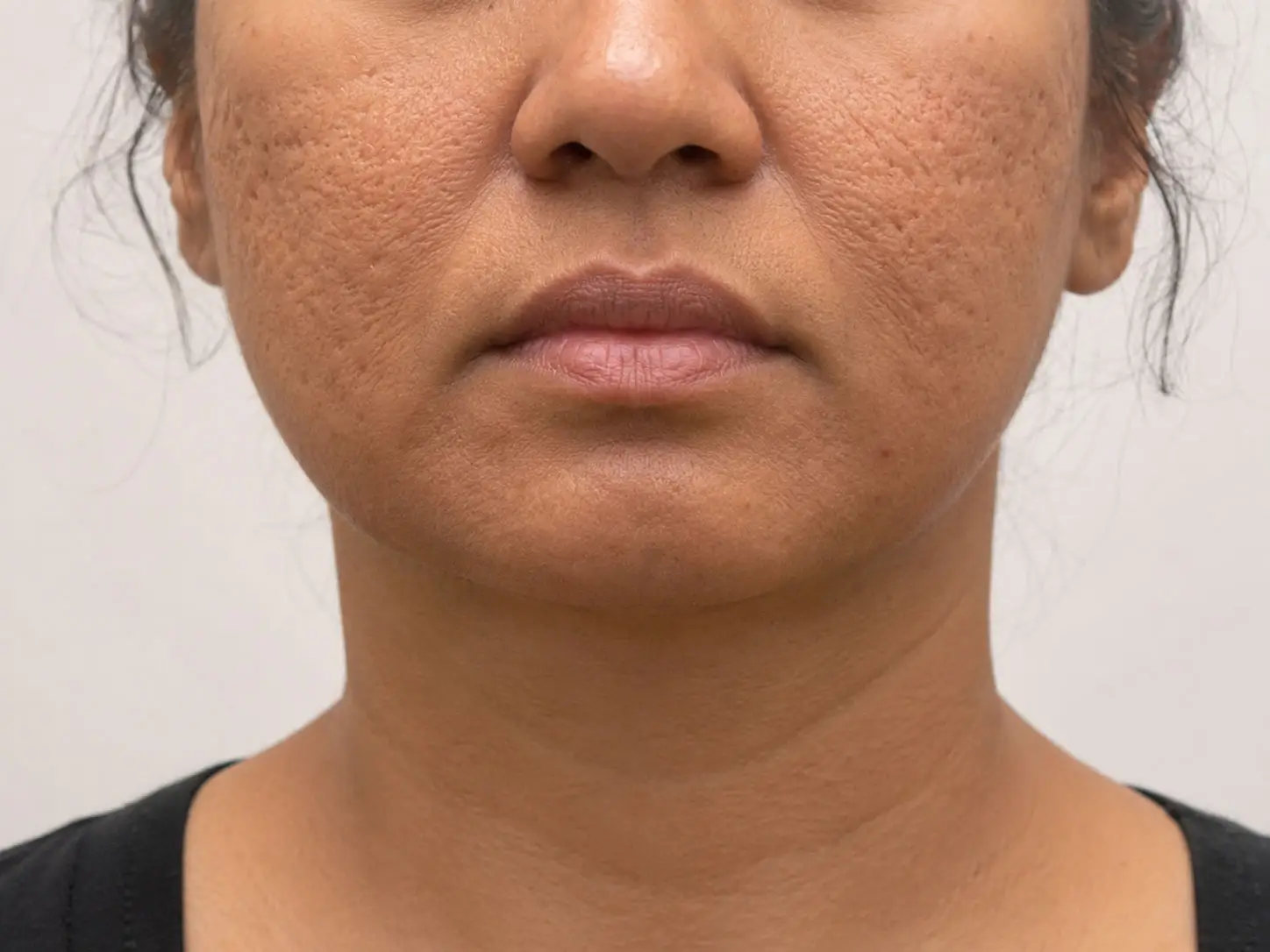
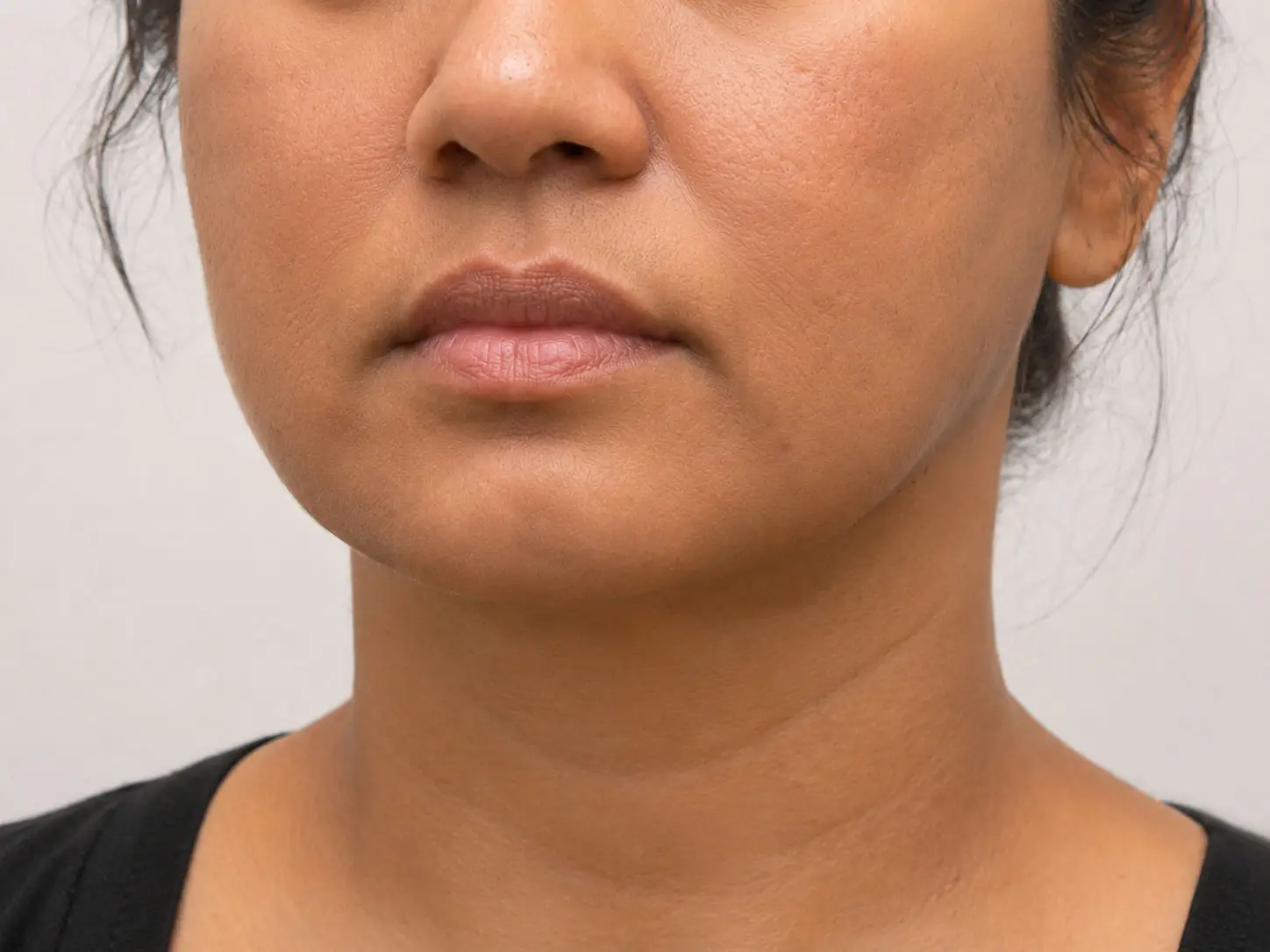
TCA CROSS is a targeted treatment designed to improve deep, indented acne scars. CROSS stands for chemical reconstruction of skin scars. During the procedure, a small amount of concentrated trichloroacetic acid or TCA, is precisely placed inside each individual scar.
Unlike a traditional chemical peel applied across a larger area, TCA CROSS treats only selected scars. The controlled application stimulates a localized healing response and encourages new collagen to form within the scar. As the skin remodels, the base of the scar may gradually rise and become less noticeable.
Atrophic acne scars develop when inflammation damages the skin’s deeper supportive tissue and the area does not produce enough collagen during healing. This leaves a visible depression in the skin.
During TCA CROSS, concentrated acid is carefully placed along the base and walls of the scar. The treated area briefly turns white, a response known as frosting. This controlled injury activates the skin’s repair process and stimulates collagen remodeling.
Improvement develops gradually over several months as the scar rebuilds from within. TCA CROSS can make scars shallower and less noticeable, but it is unlikely to remove them completely.
TCA CROSS is most commonly used for:
Ice-pick scars are narrow openings that extend deeply into the skin. Boxcar scars are wider depressions with more clearly defined edges. These scar types often respond well because the acid can be placed directly inside the depression.
Some rolling scars may be treated, but TCA CROSS is generally less effective when the scar is broad or tethered beneath the skin. Rolling scars may respond better to subcision, microneedling, fractional laser treatment or a combination of procedures.
Most patients have more than one type of acne scar. Ice-pick, boxcar and rolling scars can appear together, but each type responds differently to treatment.
Your provider will examine the depth, shape, distribution and severity of your scars before recommending a plan. Active acne should also be addressed because continued breakouts can create new scars while existing scars are being treated.
A personalized combination of treatments often produces better overall improvement than relying on one procedure alone.
TCA CROSS is used primarily for acne scars on the face, including the:
Selected scars elsewhere on the body may also be considered. Treatment concentration and technique may need to be adjusted because skin thickness, healing and the risk of discoloration vary by location.
Your appointment begins with an examination of your scars and a review of your medical history, medications, skin-care products and previous procedures.
The skin is thoroughly cleansed. Your provider then uses a fine applicator to place a very small amount of TCA precisely inside each selected scar. The acid is confined to the scar whenever possible to protect the surrounding skin.
The treated scar will briefly develop a white, frosted appearance. After all selected scars have been treated, appropriate skin-care products and sunscreen may be applied.
The procedure generally takes 30 minutes or less, depending on the number of scars being addressed.
Most patients experience brief stinging, warmth or burning as each scar is treated. Because the acid is applied to very small areas, the discomfort is generally short-lived.
The sensation may vary depending on the number, depth and location of the scars. Tell your provider immediately if you experience severe or unexpected pain during treatment.
TCA CROSS is generally performed as a series rather than a one-time treatment. The Dermatology Clinic typically recommends approximately three to six sessions spaced six to eight weeks apart.
The number of treatments needed depends on:
Multiple treatments generally produce greater improvement than a single session, but results vary and complete scar removal should not be expected.
TCA CROSS results develop gradually. Some improvement may become noticeable approximately six to eight weeks after treatment, but collagen remodeling can continue for several months.
The scars may temporarily look deeper, darker, wider or more noticeable during the early healing process. This does not necessarily represent the final result.
Improvement typically becomes easier to evaluate after the crusts, redness and temporary discoloration have resolved. Additional changes may develop as the treatment series progresses.
TCA CROSS may make appropriately selected scars:
The procedure cannot guarantee completely smooth skin or erase every scar. Results depend on scar type, depth, treatment precision, number of sessions and individual healing.
Although the collagen produced during treatment can provide lasting structural improvement, the skin will continue to change with aging, acne, sun exposure and other environmental factors.
The treated scars will turn white or frosted immediately after the acid is applied. This frosting may remain visible for several hours and can occasionally last up to approximately 12 hours.
Redness commonly develops around the treated areas. Over the following two to three days, each spot may darken and form a small crust or scab.
The crusts typically separate naturally within approximately three to seven days. Pinkness or redness may remain after the crusts fall away and can last longer in some patients.
TCA CROSS creates visible pinpoint areas of healing. Most patients can continue their regular daily activities, but the treated scars may remain noticeable for approximately one week or longer.
Temporary effects may include:
Makeup may be used after the skin is intact and your provider says it can be applied safely. Do not apply makeup over open or actively weeping areas.
Before your TCA CROSS appointment:
Patients prone to post-inflammatory hyperpigmentation may be given a pretreatment skin-care plan that includes pigment-regulating products. Use these products only as directed by your provider.
Follow the personalized instructions provided by your treatment team.
After TCA CROSS:
Picking at the treated skin can increase the risk of infection, discoloration, scar enlargement and permanent scarring.
Sun exposure during healing can make redness last longer and increase the risk of post-inflammatory hyperpigmentation.
Use broad-spectrum sunscreen every day and reapply it when outdoors. A wide-brimmed hat and physical shade provide additional protection.
Sun protection remains important after healing because ultraviolet exposure can worsen discoloration, damage collagen and make textural irregularities more noticeable.
TCA CROSS has been studied in a range of skin tones, but any controlled skin injury can cause post-inflammatory hyperpigmentation or, less commonly, loss of pigment.
Patients with melanin-rich skin may require:
Treatment should be performed by a provider experienced in chemical scar reconstruction and pigmentation management. TCA CROSS should not be described as risk-free for any skin tone.
TCA CROSS is generally well tolerated when performed precisely on an appropriate candidate, but complications are possible.
Potential risks include:
Allowing the acid to spread outside the intended scar can damage surrounding skin and worsen the scar. Precise application by an experienced provider is essential.
Contact the clinic if you experience:
Do not attempt to treat a significant reaction with additional acids, exfoliants, bleaching products or unapproved medications.
TCA CROSS may be appropriate for patients with mature, sharply defined atrophic acne scars, particularly ice-pick and narrow boxcar scars.
Good candidates generally:
A consultation is necessary because not every depressed scar will respond to TCA CROSS.
Treatment may need to be postponed or avoided if you:
Provide a complete medical, medication and treatment history so your provider can determine whether the procedure can be performed safely.
Acne scars often require more than one type of treatment. Depending on your scar pattern, TCA CROSS may be combined with:
TCA CROSS is often selected for deep ice-pick scars, while another procedure is used for broader boxcar scars, rolling scars, discoloration or overall texture.
Some treatments may be performed during the same treatment period, while others should be spaced apart to avoid excessive inflammation and allow proper healing. Your provider will recommend the safest sequence.
Traditional chemical peels spread an exfoliating solution across a larger section of skin. TCA CROSS uses concentrated acid only inside selected scars.
This focal approach allows deeper scars to be treated without intentionally peeling the entire surrounding area. The technique is especially useful for narrow scars that may be difficult to improve with surface-level treatments alone.
Because concentrated acid is used, the procedure requires precise placement and should not be attempted at home.
TCA CROSS offers a targeted approach to improving deep ice-pick and selected boxcar acne scars by stimulating collagen within each individual depression. The Dermatology Clinic can evaluate your scar types, determine whether TCA CROSS is appropriate and create a personalized plan that may include additional treatments for more comprehensive improvement. Contact us today to get scheduled.

We would love to get started on a solution that perfectly fits your needs.